
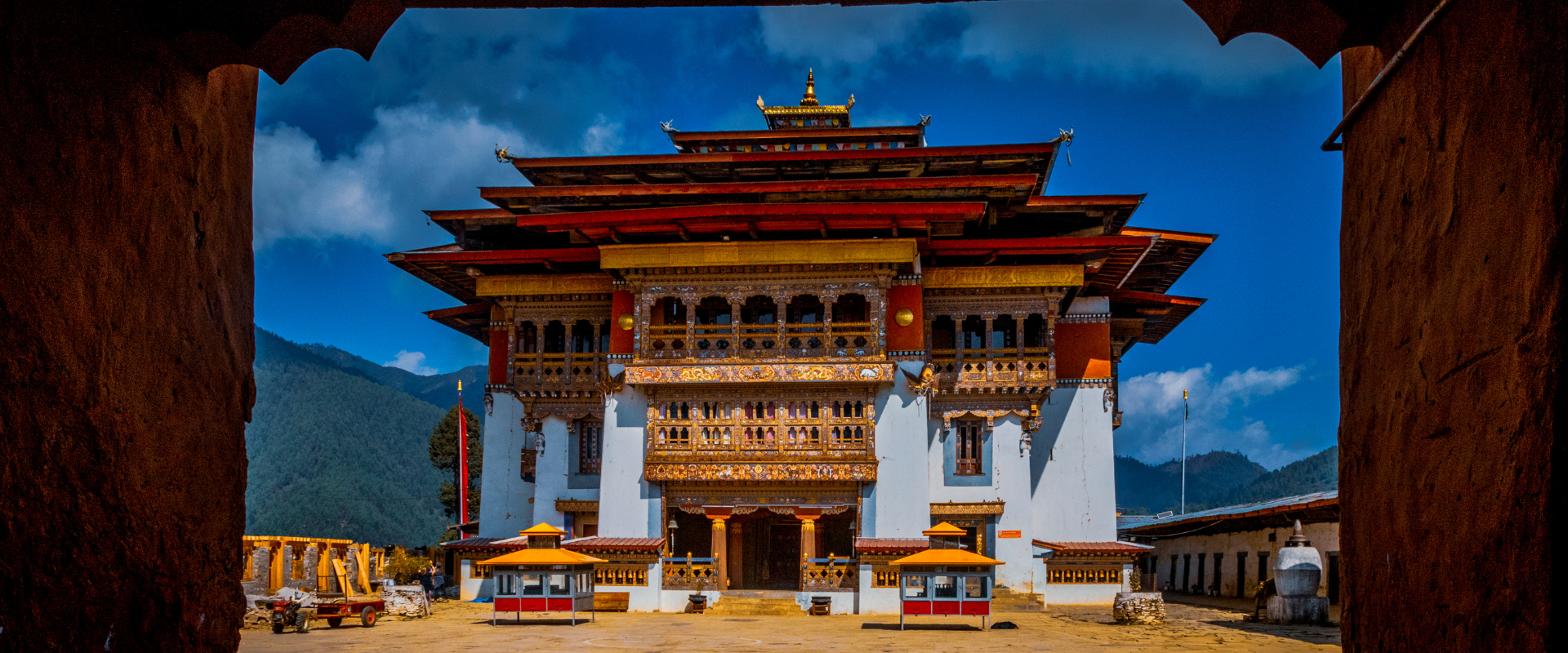
Bhutan for Indian Travellers: The Himalayan Escape That Feels Closer Than Ever
Nandini Mishra
Author
No visa. No long-haul flight. No ordinary holiday. Bhutan offers Indian travellers a rare combination of Himalayan landscapes, living heritage, spiritual experiences and easy accessibility making it one of the region’s most compelling international getaways.
For Indian travellers, Bhutan has always had a certain familiarity. It is close, culturally connected and easy to reach. But look beyond the familiar images of monasteries and prayer flags, and Bhutan reveals a much bigger tourism story from adventure and wellness to luxury stays, road trips, festivals, family holidays and immersive cultural experiences.
And in 2026, several developments are making the destination even more interesting for the Indian market.
VISA-FREE DOESN’T MEAN PERMIT-FREE
One of Bhutan’s biggest advantages for Indian travellers is simple:
Indian citizens do not need a visa to visit Bhutan.
However, Indian nationals do require an Entry Permit. The permit can be obtained in advance through Bhutan’s immigration system, and Indian travellers are also eligible to obtain the permit at the port of entry. Bhutan’s Department of Immigration recommends applying in advance to reduce waiting time.
Travellers can enter using:
A valid Indian passport
A valid Indian Voter ID card
For Indian nationals below 18, a passport or birth certificate, with the applicable guardian requirements
If travelling on an Indian passport, it should have at least six months’ validity from the intended date of departure from Bhutan.
This makes Bhutan particularly attractive for travellers looking for an international holiday without the complexity of a conventional visa application.
A QUICK HIMALAYAN ESCAPE FROM INDIA
Bhutan is one of those destinations where the journey itself feels like part of the experience.
Paro International Airport is Bhutan’s main international airport, with flights connecting the country to Indian cities including Delhi, Kolkata, Bagdogra, Bodhgaya and Guwahati, alongside international destinations. Flights are operated by Bhutanese carriers including Drukair and Bhutan Airlines.
For travellers from North and East India, there is another option: road travel through Bhutan’s land borders with India.
Phuentsholing, for example, is directly connected to Jaigaon in West Bengal, making Bhutan particularly accessible for road trips originating from West Bengal, Bihar, Assam and neighbouring regions.
This accessibility makes Bhutan suitable for everything from a long weekend-style escape to a 7–10 night Himalayan circuit.
THE 2026 SDF UPDATE INDIAN TRAVELLERS SHOULD KNOW
Bhutan’s tourism model is built around sustainable and responsible travel, with the Sustainable Development Fee (SDF) supporting the country’s environmental, cultural and social priorities.
For Indian tourists, the current SDF is:
INR 1,200 per person per night
Children aged 6–12 years receive a 50% concession, while children aged 5 years and below are exempt from the SDF.
There is also an important 2026 opportunity for travellers visiting Bhutan’s border towns.
Tourists visiting Samtse, Phuentsholing, Gelephu and Samdrup Jongkhar for up to 24 hours can benefit from an SDF waiver, subject to the applicable conditions.
For travel planners, this opens up an interesting proposition for short border-town experiences and quick Bhutan add-ons.
PARO: YOUR FIRST INTRODUCTION TO BHUTAN
The first glimpse of Bhutan is often enough to understand why the destination feels so different.
Mountain landscapes surround Paro, while traditional Bhutanese architecture, monasteries and historic landmarks shape the valley.
But Paro's defining experience is undoubtedly Taktshang Goemba, the Tiger’s Nest Monastery.
Clinging dramatically to a cliffside, the monastery has become the visual symbol of Bhutan. The hike to Tiger’s Nest is an experience in itself, taking travellers through pine forests, mountain views and prayer-flag-lined trails.
But Paro deserves more than a half-day visit.
Travellers can explore Rinpung Dzong, Kyichu Lhakhang, Paro town and surrounding villages, while also experiencing Bhutanese food, handicrafts and traditional architecture.
For first-time visitors, Paro sets the tone for the entire journey.
THIMPHU: A CAPITAL THAT DOESN’T FEEL LIKE ONE
Drive into Thimphu, and Bhutan takes on another personality.
This is the country’s capital, but it doesn't look or feel like a conventional Asian metropolis.
Traditional architecture remains integral to the cityscape, while cafés, restaurants, markets and contemporary lifestyle spaces bring a modern energy.
Some of the city's must-visits include:
Buddha Dordenma — one of the world's largest Buddha statues, overlooking the Thimphu Valley.
Tashichho Dzong — an impressive fortress-monastery and important seat of Bhutan's government and religious institutions.
Memorial Chorten — a prominent spiritual landmark in the heart of the capital.
Centenary Farmers’ Market — a great place to experience local produce and everyday Bhutanese life.
Thimphu is also where travellers can discover Bhutanese textiles, handicrafts, cuisine and contemporary culture.
PUNAKHA: WHERE THE LANDSCAPE OPENS UP
From Thimphu, the journey towards Punakha takes travellers through mountain passes and changing landscapes.
At Dochula Pass, 108 chortens stand against a dramatic Himalayan backdrop. On clear days, the views extend towards some of Bhutan’s highest peaks.
Then comes Punakha — greener, warmer and slower.
The centrepiece is Punakha Dzong, dramatically positioned at the confluence of the Pho Chhu and Mo Chhu rivers.
The surrounding valley offers a completely different Bhutan experience, with riverside landscapes, village walks, temples and opportunities for outdoor activities.
For couples and honeymooners, Punakha adds a romantic element to the itinerary.
For families, it offers a more relaxed pace.
And for photographers, it is simply spectacular.
GANGTEY: A DIFFERENT SIDE OF BHUTAN
Want to go beyond the usual tourist circuit?
Head towards Gangtey and the Phobjikha Valley.
The broad valley is surrounded by mountains and forests and is particularly famous for the black-necked cranes that migrate to Bhutan during the winter months.
Here, the experience is less about ticking off monuments and more about being surrounded by nature.
Walk through the valley.
Visit Gangtey Monastery.
Explore local villages.
Look for cranes during the migration season.
Or simply slow down.
This is Bhutan at its most peaceful.
BHUMTANG: FOR THE CURIOUS TRAVELLER
For travellers who want to venture deeper into Bhutan, Bumthang offers a richer cultural experience.
Often described as the spiritual heartland of Bhutan, the region is home to ancient temples, monasteries and traditional communities.
It is particularly suited to travellers who have already experienced the classic Paro–Thimphu–Punakha circuit and want to explore a less-travelled side of the kingdom.
This is where Bhutan transforms from a sightseeing destination into a deeper cultural journey.
THE TRANS BHUTAN TRAIL: BHUTAN ON FOOT
Bhutan isn't just for sightseeing from a car window.
The Trans Bhutan Trail offers an entirely different way to experience the country.
Stretching for more than 400 kilometres across Bhutan, the historic trail connects communities, valleys, monasteries and landscapes from western to eastern Bhutan.
Travellers can choose sections of the trail rather than undertaking the entire route, making it possible to incorporate hiking and walking experiences into a conventional holiday.
For Indian adventure travellers, this creates a strong alternative to the usual Himalayan getaway.
WELLNESS IS NOT A TREND IN BHUTAN, IT IS A WAY OF LIFE
In a world of packed itineraries and always-on travel, Bhutan offers something increasingly valuable:
time to slow down.
Meditation, monasteries, mountain walks, traditional hot-stone baths and quiet valleys make Bhutan naturally suited to wellness travel.
The experience is not necessarily about a luxury spa.
It can be sitting quietly overlooking a valley.
Walking through a pine forest.
Visiting a centuries-old monastery.
Or experiencing a traditional Bhutanese hot-stone bath after a day on the road.
For Indian travellers seeking a digital detox, mindfulness break or restorative holiday, Bhutan offers a natural setting for it.
THE INDIAN RUPEE MAKES THINGS EASIER
Another practical advantage is the currency relationship.
The Bhutanese Ngultrum is pegged 1:1 with the Indian Rupee, making it relatively easy for Indian travellers to understand and manage expenses. Indian Rupees are also widely accepted.
However, travellers should be mindful of payment methods.
Bhutan Tourism currently advises Indian visitors that USD-denominated cards do not work in Bhutan due to RBI regulations and recommends carrying cards valid for India, Bhutan and Nepal.
For smaller towns and local experiences, carrying some cash remains useful.
VEGETARIAN? INDIAN FOOD? NO PROBLEM.
Bhutanese cuisine is distinctive, bold and deeply connected to local culture.
Ema Datshi, made with chilli and cheese, is perhaps the country's most famous dish.
But Indian travellers don't need to worry about finding familiar food.
Indian cuisine is readily available in major tourist destinations, while vegetarian meals can generally be accommodated by hotels and restaurants.
At the same time, Bhutan is an opportunity to move beyond familiar food and experience local dishes, traditional butter tea, red rice and regional flavours.
BHUTAN FOR EVERY KIND OF INDIAN TRAVELLER
The beauty of Bhutan is that it doesn't need to be sold as one type of holiday.
For families
A combination of culture, nature, short hikes and comfortable stays makes Bhutan a strong multigenerational destination.
For honeymooners
Paro, Punakha and Gangtey offer spectacular landscapes, intimate stays and experiences that feel genuinely different.
For adventure seekers
Trekking, hiking, rafting, cycling and the Trans Bhutan Trail add an active dimension.
For wellness travellers
Meditation, spirituality, nature and traditional wellness experiences make Bhutan an increasingly relevant retreat destination.
For luxury travellers
Bhutan's growing portfolio of luxury resorts allows travellers to pair its remote landscapes with high-end hospitality.
For MICE and incentive groups
The destination's culture, landscapes and distinctive experiences can turn a corporate trip into something far more memorable than a conventional conference programme.
WHEN SHOULD INDIANS VISIT BHUTAN?
Bhutan works across the year, but the experience changes dramatically by season.
March–May: Spring brings flowers, greenery and excellent conditions for outdoor exploration.
June–August: The monsoon creates lush landscapes, although rain can affect road and trekking plans.
September–November: Clearer skies and comfortable temperatures make autumn a popular period for sightseeing and trekking.
December–February: Winter offers crisp mountain views and colder conditions, with opportunities to experience Bhutan's quieter side.
For travellers interested in black-necked cranes, festivals, trekking or snowfall, the timing should be planned around the specific experience rather than simply the weather.
WHY BHUTAN MAKES SENSE FOR INDIA IN 2026
Bhutan's proposition for Indian travellers can be summed up in a few compelling advantages:
No visa required — Indian nationals need an Entry Permit instead.
Accessible from India — with air connectivity to Paro from several Indian cities and multiple land-entry options.
Concessional SDF — INR 1,200 per person per night for Indian tourists, with child concessions and exemptions.
24-hour border-town SDF waiver — applicable to designated Bhutanese border towns under the current policy.
Indian Rupee-friendly — the Ngultrum is pegged 1:1 with INR and Indian currency is widely accepted.
Diverse experiences — from culture and spirituality to adventure, wellness, luxury and nature.
A destination with a difference — Bhutan has deliberately protected its culture, landscapes and slower pace rather than becoming another mass-tourism destination.
THE BOTTOM LINE: BHUTAN IS MORE THAN TIGER'S NEST
For years, Bhutan was often reduced to one iconic image:
Tiger's Nest.
But that is only the beginning.
The real Bhutan lies in the road winding through the Himalayas, the sound of prayer wheels turning outside a monastery, the valleys of Punakha, the cranes of Phobjikha, the markets of Thimphu, the ancient temples of Bumthang and the conversations with local communities along the way.
For Indian travellers, it is a destination that combines international travel appeal with extraordinary accessibility.
And in 2026, as travellers increasingly seek meaningful, slower and experience-led holidays, Bhutan's greatest luxury may not be a five-star resort.
It may simply be the opportunity to slow down.
Closer than you think. Deeper than you expect. Bhutan is ready to be discovered beyond the postcard.