
Visa-Friendly, Value-Rich: Why Uzbekistan Should Be on Every Indian Traveller’s Bucket List
Nandini Mishra
Author
For travellers looking beyond the usual international holiday circuit, Uzbekistan offers an appealing combination: rich Silk Road heritage, striking architecture, diverse experiences, improving connectivity from India and a relatively straightforward e-visa process. And with tourism continuing to grow in 2026, the destination is increasingly finding its place on the Indian travel map.
According to Uzbekistan’s National Statistics Committee, 6.56 million foreign visitors travelled to the country for tourism in January–June 2026, up 24.9% year-on-year. India was among the top 10 source markets, contributing 26,450 visitors during the first six months of 2026.
A Short-Haul Destination That Feels Like Another World
One of Uzbekistan’s biggest advantages for Indian travellers is its accessibility.
Direct air connectivity links India with Tashkent, the country’s main international gateway. IndiGo operates direct services from Delhi to Tashkent, while its direct Mumbai–Tashkent service was introduced in 2025.
Connectivity has also expanded through Uzbekistan’s own carriers. Centrum Air currently operates three weekly Delhi–Tashkent flights, according to its May 2026 update.
Adding another layer of convenience, Uzbekistan Airways and Air India entered into a codeshare agreement effective March 20, 2026, covering Tashkent–Delhi, Tashkent–Mumbai and the seasonal Tashkent–Goa route. The agreement enables eligible journeys to be booked on a single ticket, strengthening the travel ecosystem between the two countries.
For Indian travellers, this makes Uzbekistan particularly relevant for short breaks, long weekends, family holidays, group tours, MICE travel and multi-city cultural itineraries.
The Visa Process: Simple, But Plan Ahead
Indian passport holders are not currently covered by Uzbekistan’s 30-day visa-free regime, but India is included in the country's simplified e-visa system.
Travellers can apply through the official Uzbekistan e-visa portal, where the application is completed online and the approved e-visa is sent electronically.
The official tourism guidance states that the e-visa can be issued for a stay of up to 30 days and is valid for entry within 90 days from the date of issue. The official guidance also indicates a processing period of around three business days.
Official portal: e-visa.gov.uz
For travel professionals, the key takeaway is simple: Uzbekistan is not visa-free for Indian citizens, but its e-visa process is considerably more straightforward than many traditional visa procedures. Travellers should apply in advance and verify the latest requirements before departure.
Tashkent: Where Modern Uzbekistan Meets Its Silk Road Past
Most Indian itineraries begin in Tashkent, Uzbekistan’s capital and a city where Soviet-era architecture, Islamic heritage, modern shopping districts and contemporary entertainment coexist.
The city is more than just an arrival point. Travellers can explore Amir Timur Square, Independence Square, the Khast Imam complex and the famous Tashkent Metro, whose elaborately decorated stations have become an attraction in their own right.
The capital is also becoming increasingly contemporary, with new cultural, entertainment and lifestyle spaces complementing its historic quarters.
For families, Magic City offers entertainment and leisure experiences, while food lovers can explore Uzbek cuisine alongside a growing selection of international and Indian dining options.
Samarkand: The Jewel of the Silk Road
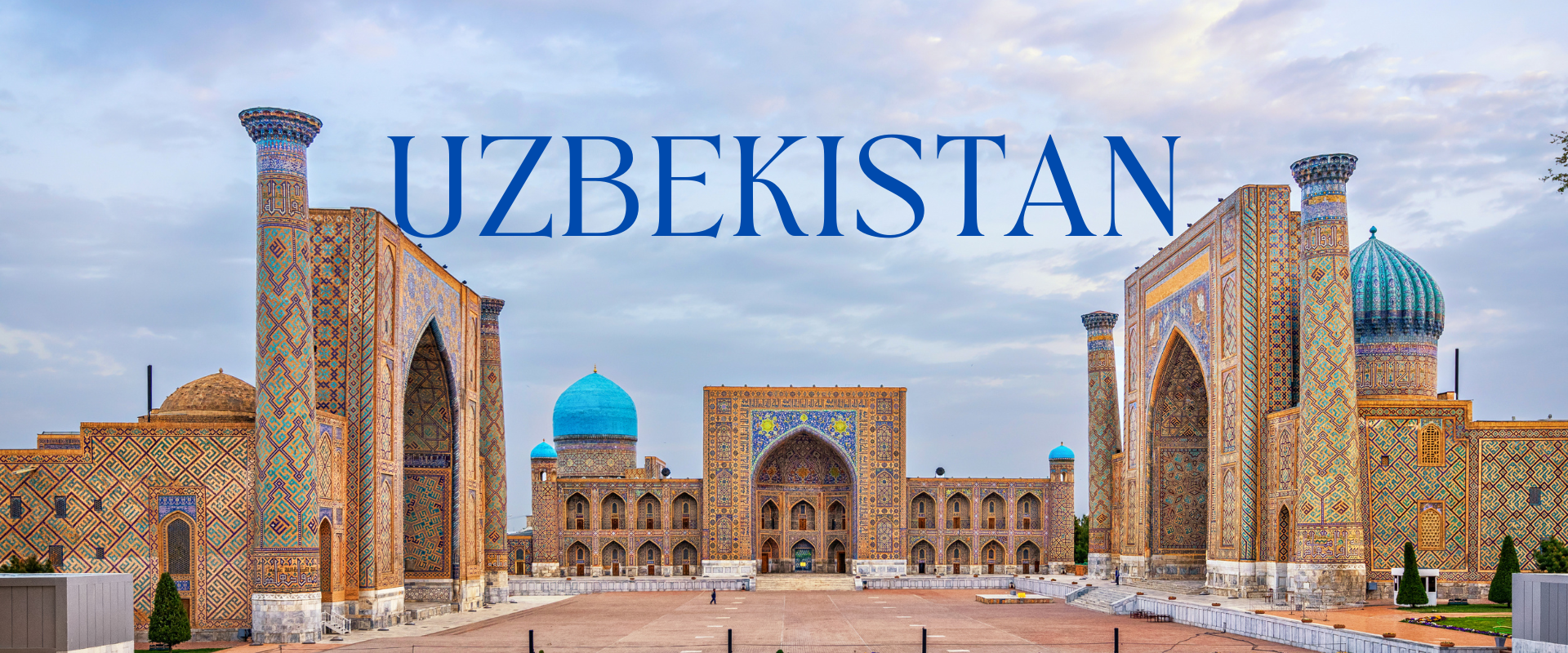
If there is one image that defines Uzbekistan for the global traveller, it is arguably Samarkand’s Registan Square.
Once a major crossroads of the Silk Road, Samarkand combines monumental Islamic architecture with centuries of scientific, artistic and commercial history. The Registan, Gur-e-Amir Mausoleum, Bibi-Khanym Mosque and Shah-i-Zinda necropolis form the core of a destination that feels simultaneously historic and alive.
The Uzbekistan Tourism Board describes Samarkand as a crossroads of cultures, with the city itself recognised as a UNESCO World Heritage destination.
But modern Samarkand is not frozen in the past. The city is also home to Silk Road Samarkand, a contemporary tourism complex bringing hotels, leisure, business and cultural experiences into the itinerary.
For Indian travellers, Samarkand can easily become the centrepiece of a 5–7 night Uzbekistan holiday.
Bukhara: A Living Silk Road Experience
If Samarkand is monumental, Bukhara is atmospheric.
With its historic mosques, madrasahs, trading domes, courtyards and narrow lanes, Bukhara allows travellers to experience the Silk Road at a slower pace.
The Poi-Kalyan complex, Lyabi-Hauz, Ark Fortress and traditional trading domes are among the city's highlights. The destination is particularly appealing for travellers interested in architecture, history, photography, handicrafts and immersive cultural experiences.
Bukhara's traditional artisan culture also gives the city a distinct identity, with crafts and workshops continuing to play an important role in the visitor experience.
Khiva: An Open-Air Museum at the End of the Silk Road
For travellers looking for something truly cinematic, Khiva deserves a place on the itinerary.
At its heart lies Itchan Kala, the walled inner city and UNESCO World Heritage Site. Its minarets, madrasahs, mosques, palaces and narrow streets create the feeling of walking through a historic Silk Road settlement.
Highlights include the Kunya-Ark Fortress, Tosh-Hovli Palace, Kalta Minor Minaret and Juma Mosque.
And getting there has become significantly easier.
A Major 2026 Rail Upgrade Changes the Khiva Itinerary
One of Uzbekistan's most important travel developments in 2026 is the introduction of the new Hyundai Rotem “Jaloliddin Manguberdi” high-speed trains.
According to Uzbekistan Railways, the trains began operating on the Tashkent–Khiva route in May 2026, reducing the journey from around 14 hours to approximately 7 hours 30 minutes. The service stops at major cities including Samarkand, Navoi, Bukhara and Urgench before reaching Khiva.
This is a significant development for destination planning. A route that once required a much longer journey can now be incorporated more comfortably into multi-city programmes.
The new trains can travel at speeds of up to 250 km/h, with six such trains planned for Uzbekistan.
For Indian travellers, this strengthens the classic Tashkent–Samarkand–Bukhara–Khiva circuit and makes a deeper exploration of Uzbekistan increasingly practical.
The Afrosiyob Advantage
For the country's most popular cultural cities, the Afrosiyob high-speed railway remains another major advantage.
Travellers can connect Tashkent with Samarkand and Bukhara by high-speed train, helping reduce travel time and making multi-destination holidays more comfortable.
This means travellers don't necessarily have to choose between seeing Uzbekistan's major cities and keeping their holiday compact. A carefully planned itinerary can combine several destinations without excessive road travel.
Beyond the Classic Four Cities
Uzbekistan's appeal goes beyond Tashkent, Samarkand, Bukhara and Khiva.
The country's official tourism platform highlights destinations including Shakhrisabz, Termez, Zaamin, Muynak and the Ferghana Valley, while its tourism portfolio spans cultural, gastronomic, ecotourism, youth, adventure and wellness experiences.
Shakhrisabz, the birthplace of Amir Timur, offers another perspective on Uzbekistan's Timurid heritage.
Termez, in the south, is particularly interesting for travellers drawn to archaeology and ancient civilisations.
Zaamin, often referred to as the “Uzbek Switzerland,” brings mountains and nature into the itinerary.
And for travellers seeking something completely different, Muynak and the Aral Sea region offer a striking journey into one of Central Asia's most unusual landscapes.
A Destination Built for Different Traveller Segments
Uzbekistan's versatility is one of its strongest selling points.
For families, there are comfortable hotels, cultural attractions, entertainment zones and manageable intercity journeys.
For couples, the destination offers atmospheric old cities, boutique stays, scenic experiences and photogenic architecture.
For young travellers, bazaars, cafés, nightlife, contemporary attractions and adventure experiences add variety.
For MICE and groups, the combination of international connectivity, hotels, cultural venues and distinctive experiences creates opportunities for programmes beyond conventional European or Southeast Asian destinations.
And for repeat international travellers, Uzbekistan offers something particularly valuable: the feeling of discovering a destination before it becomes completely mainstream.
Value That Works for Indian Travellers
Uzbekistan also makes a strong proposition from a value perspective.
The Uzbek som (UZS) is the local currency, while accommodation, dining, local transportation and experiences can offer attractive value depending on the traveller's chosen category and season.
App-based transportation is widely available in major cities, while vegetarian and Indian food options can be incorporated into itineraries, particularly in key tourist centres such as Tashkent and Samarkand.
Rather than positioning Uzbekistan simply as a “cheap destination”, it is better understood as a destination that can deliver high cultural and experiential value across different budget levels.
Why Uzbekistan, Why Now?
The numbers tell an interesting story.
Uzbekistan recorded 10.7 million foreign tourist arrivals in January–November 2025, an increase of 47.4% over the same period in 2024. Indian visitors accounted for approximately 73,400 arrivals during those 11 months.
The momentum has continued into 2026, with 26,450 Indian tourists recorded in January–June alone.
At the same time, connectivity is expanding, rail infrastructure is improving and the destination continues to broaden its tourism offering.
For Indian travellers, that creates a compelling proposition: a destination close enough for a short holiday, rich enough for a longer journey and diverse enough to build completely different itineraries around it.
Uzbekistan: Closer Than You Think, Richer Than You Imagine
From the blue-tiled grandeur of Samarkand to the atmospheric streets of Bukhara, from Tashkent's modern energy to Khiva's ancient walls, Uzbekistan is a destination where every city tells a different chapter of the Silk Road story.
With improving air connectivity, a streamlined e-visa route for Indian passport holders, high-speed rail and growing tourism infrastructure, Uzbekistan is becoming an increasingly practical choice for Indian outbound travel in 2026.
For travel professionals, the opportunity is equally clear: Uzbekistan is no longer just a niche Central Asian destination. It is a versatile, experience-rich product that can be shaped for leisure, families, groups, MICE, culture and short-haul getaways.
Ready to build Uzbekistan into your next itinerary? Connect with us to access trusted Uzbekistan DMCs, destination insights and itinerary support to create seamless experiences your clients will love.
Travel requirements, visa rules, flight schedules and fares can change. Travellers and travel professionals should verify the latest information with the relevant official authorities and airlines before booking.