India–Uzbekistan Ties Just Got Bigger: Here’s What It Means for Indian Travellers
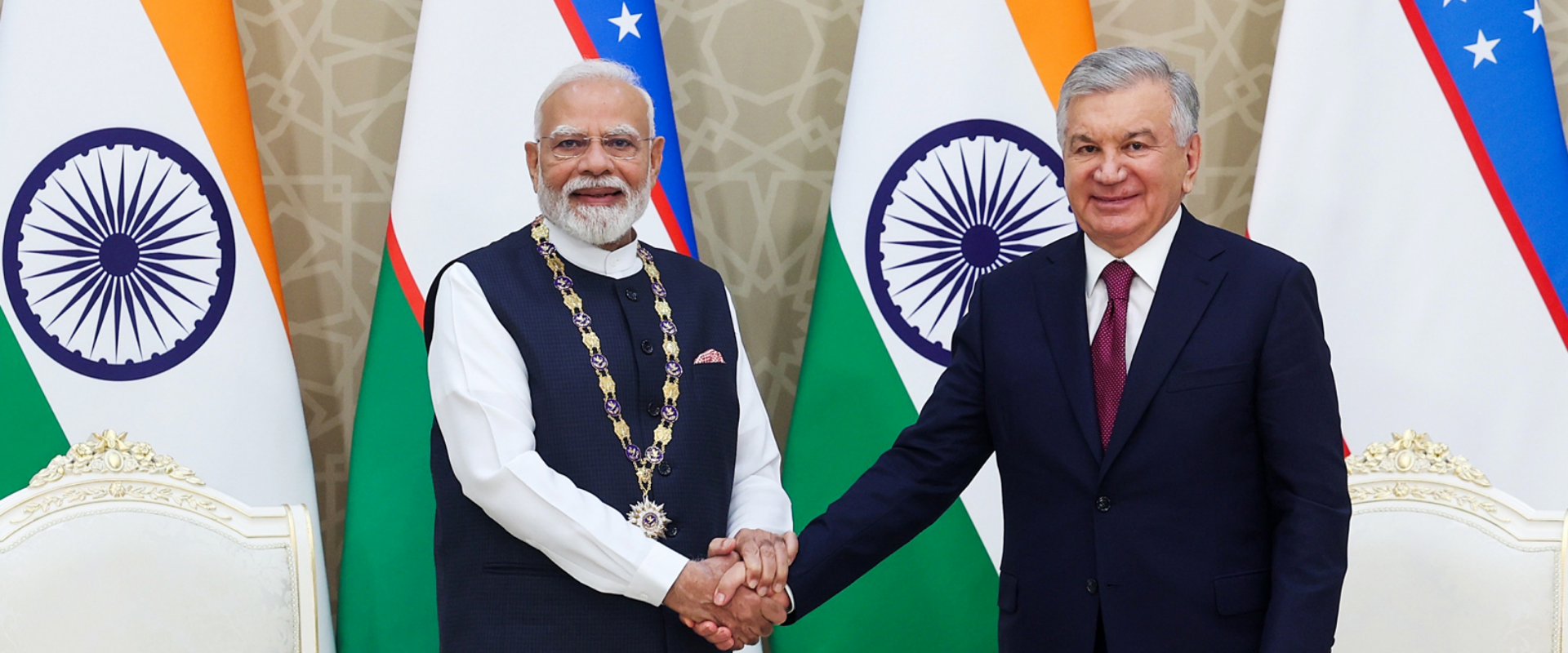
India and Uzbekistan have taken their longstanding relationship into a new phase, with Prime Minister Narendra Modi’s state visit to Tashkent on August 29–30, 2026, resulting in the elevation of the bilateral Strategic Partnership to a Comprehensive Strategic Partnership. The development marks a significant step forward in cooperation across trade, tourism, digital connectivity, culture, education, sustainability and people-to-people exchanges.
During the visit, Prime Minister Modi and Uzbek President Shavkat Mirziyoyev reviewed the breadth of bilateral relations and identified several priority areas for deeper cooperation, including trade and investment, digital public infrastructure and UPI, healthcare, critical minerals, agriculture, education, tourism and space.
A stronger partnership with tourism at its heart
For Indian travellers, one of the most notable outcomes is the Tourism Partnership Programme for 2026–28, signed between India’s Ministry of Tourism and Uzbekistan’s Tourism Committee. The programme is expected to strengthen cooperation in tourism and further encourage people-to-people connections between the two countries.
This comes at an opportune time as Uzbekistan continues to emerge as an increasingly attractive destination for Indian travellers. Its combination of Silk Road heritage, grand Islamic architecture, vibrant bazaars, culinary traditions and growing modern-city experiences offers a distinctive proposition for leisure, cultural and experiential travel.
From the architectural splendour of Samarkand and Bukhara to the historic streets of Khiva and the contemporary energy of Tashkent, Uzbekistan offers Indian visitors a journey that combines history with modernity.
Travel gets more digitally connected
Another development with direct relevance for Indian visitors is the new arrangement enabling UPI apps from India to scan Uzbekistan’s national UZQR codes for merchant payments.
The agreement between NPCI International Payments Ltd and Uzbekistan’s National Interbank Processing Centre is designed to enable UPI-based merchant payments in Uzbekistan, adding another layer of digital convenience for Indian travellers.
For travellers, the significance goes beyond payments. It represents a growing digital connection between the two countries and supports a more seamless travel experience as Uzbekistan welcomes more visitors from India.
From ancient Buddhist links to contemporary cultural exchange
The relationship between India and Uzbekistan is also rooted in centuries of civilisational exchange. The latest agreements place renewed emphasis on this shared heritage.
India and Uzbekistan have signed a Cultural Exchange Programme for 2026–30, while a Letter of Intent will support the conservation and restoration of the ancient Buddhist sites of Fayaz Tepa and Kara Tepa in Termez. The two countries will also cooperate in archival work, higher education, scientific research and traditional systems of medicine, including Ayurveda.
The announcement of an ICCR Sanskrit Chair at Tashkent State University of Oriental Studies, along with 100 Lal Bahadur Shastri Scholarships for Hindi language studies, further underlines the cultural and educational dimensions of the relationship.
For Indian travellers, these initiatives add another dimension to visiting Uzbekistan, one that goes beyond sightseeing and connects destinations with the shared history and cultural exchanges that have linked India and Central Asia for centuries.
Trade and investment ties gain momentum
The Comprehensive Strategic Partnership also creates a broader framework for economic cooperation. The two countries are expanding collaboration in areas including geology and mineral resources, healthcare and pharmaceuticals, agriculture, innovation and start-ups, digital infrastructure and economic and financial dialogue.
A new Economic and Financial Dialogue between the two countries is expected to provide another platform for strengthening economic engagement, while cooperation in geology and mineral resources opens avenues in a strategically important sector.
At the regional level, a partnership agreement between Gujarat and the Samarkand region will further encourage sub-national cooperation and create opportunities for closer economic, cultural and institutional engagement.
A partnership that extends beyond tourism
The new phase of India–Uzbekistan relations also carries a strong sustainability focus. India has announced a US$1 million grant for afforestation in the Aral Sea region, while the two countries have agreed to strengthen cooperation in environmental protection.
Education and diplomacy are also receiving renewed attention through agreements between India’s Sushma Swaraj Institute of Foreign Service and Uzbekistan’s Diplomatic Academy, as well as a wider framework for cooperation in higher education and scientific research.
What this means for Indian travellers
The latest developments point towards an India–Uzbekistan relationship that is becoming increasingly relevant to the travel ecosystem.
Stronger tourism cooperation.Greater digital payment connectivity.Deeper cultural exchange.More institutional collaboration.And a renewed focus on people-to-people connections.
For Indian travellers, this translates into more reasons to look at Uzbekistan not only as a Silk Road destination, but as a country with which India is building an increasingly connected and contemporary relationship.
As the two nations move from a Strategic Partnership to a Comprehensive Strategic Partnership, Uzbekistan’s appeal for Indian travellers is poised to grow, bringing its historic cities, living culture and Central Asian experiences even closer to the Indian market.
The next chapter of India–Uzbekistan relations is not only about diplomacy. It is about creating more avenues to connect, collaborate and travel.